Science: Invertebrates
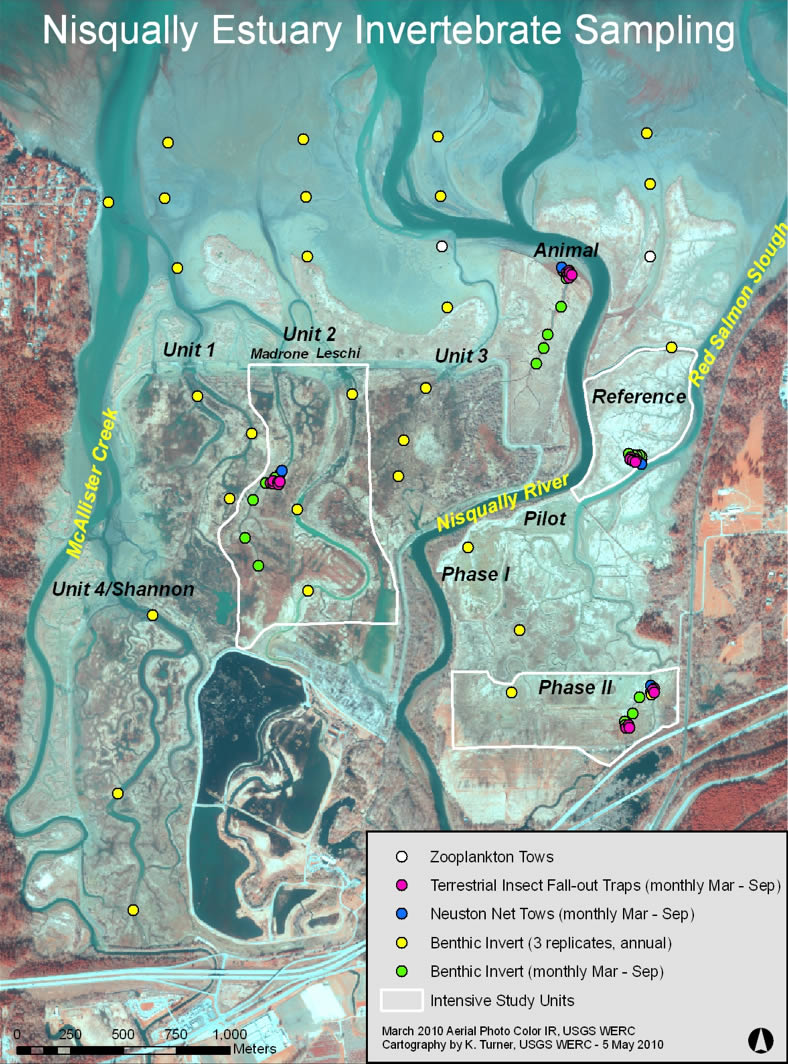
Fig 1. Annual offshore to onshore benthic invertebrate sampling was started prior to the Nisqually NWR dike removal in August 2009. Monthly invertebrate sampling in relation to the fish diet study (terrestrial insect, neuston, and benthic invertebrate) started in 2010. In 2011, this sampling will be reduced. Benthic invertebrates will be sampled once rather than monthly and neuston and terrestrial insects will be sampled monthly between April and August.
Invertebrates are important indicators of water quality and ecological integrity of marsh habitats. They are also key food resources for fish and avian predators. In the Nisqually estuary, we are conducting two research studies looking at the response of invertebrate communities to restoration:
- Offshore to onshore annual benthic sampling to determine if there is a gradient in invertebrate communities as you move from the tidal flats to the channels within the restored areas. This study will also help us to understand colonization and changes in community composition as a result of restoration. At each location benthic invertebrate cores (10 cm diameter, 10 cm depth) will be taken annually in August. In addition, physical variables that may affect invertebrate composition such as water quality, and sediment characteristics (composition, nutrients, particle size, organic matter, etc.) will be taken during invertebrate collection. Samples will be screened (0.5 mm sieve) and stored in ethanol with rose Bengal dye to help distinguish organic tissues. Pre and post dike removal samples have been collected that and are currently being processed.
- Invertebrates are also being sampled to quantify the available food resources for juvenile Chinook. Invertebrates were sampled from three different strata: insects that fall into the water from the aerial environment (fall out traps), neuston found within the water column (neuston net), and benthic epi- and infauna (benthic invertebrate core). Monthly sampling started in March 2010 and continued through August. Sampling will continue in 2011, though frequency will be reduced. By comparing the types of invertebrates collected at each tidal channel to those found in the fish stomach samples, we can determine whether or not juvenile Chinook are feeding in the channels they are found in.
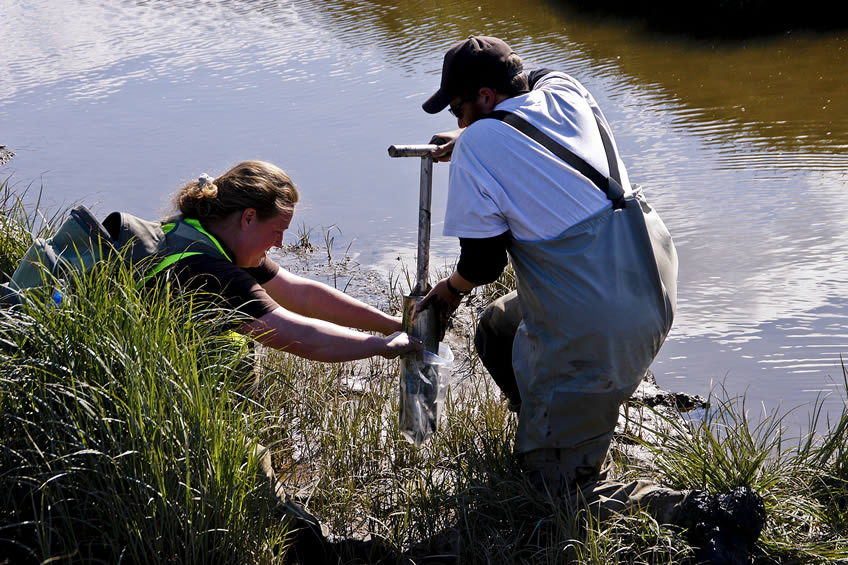
Photo 1. Technicians collecting benthic cores at Phase II. Photo by Jan Wieser
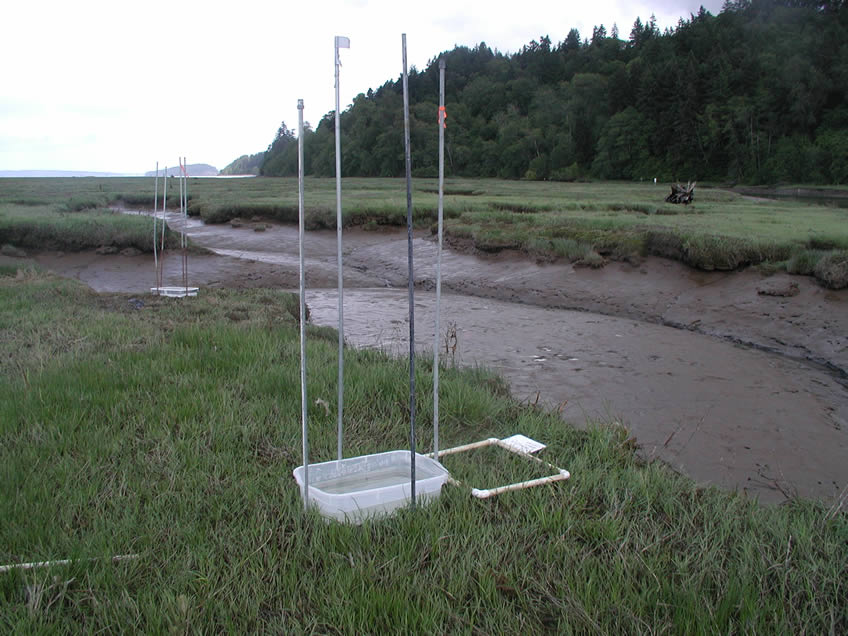
Photo 2. Fall-out traps on Reference marsh.
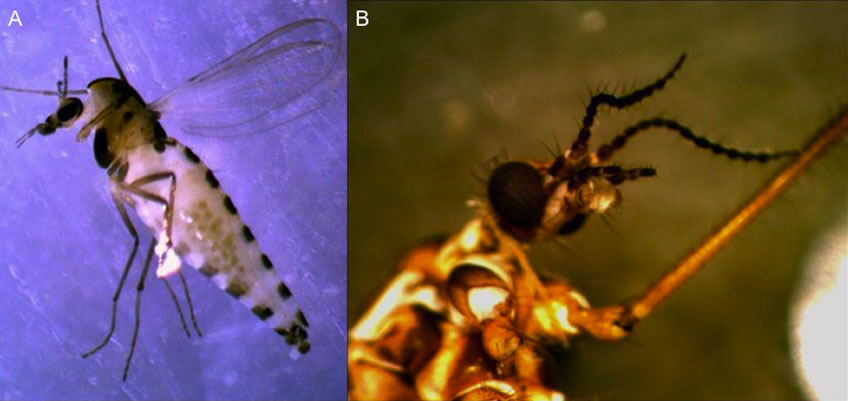
Photo 3. Two insects found in fall-out traps. (A) Chironomid, midge (B) Tipulidae, crane fly.
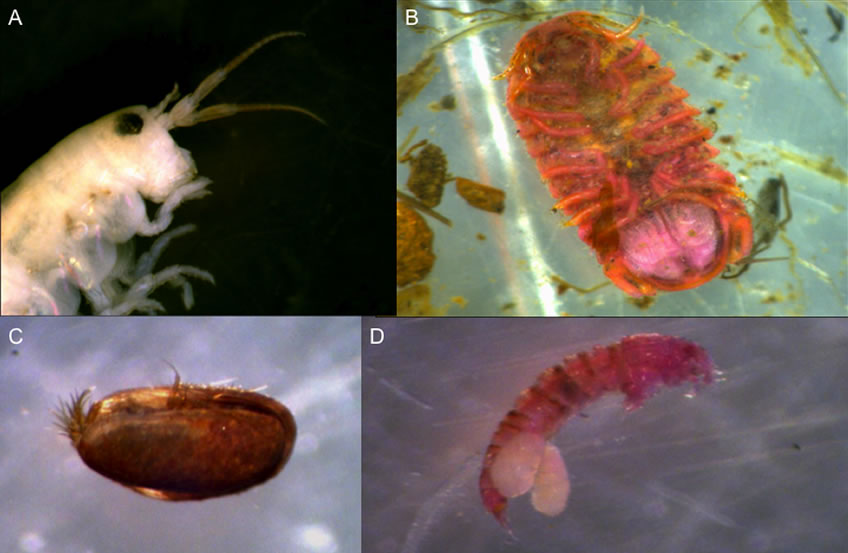
Photo 4. Four invertebrates found in benthic cores. (A) Talitridae, amphipod; (B) Ventral side of a isopod; (C) Ostracod; (D) Harpacticoida copepod with paired egg sac.